
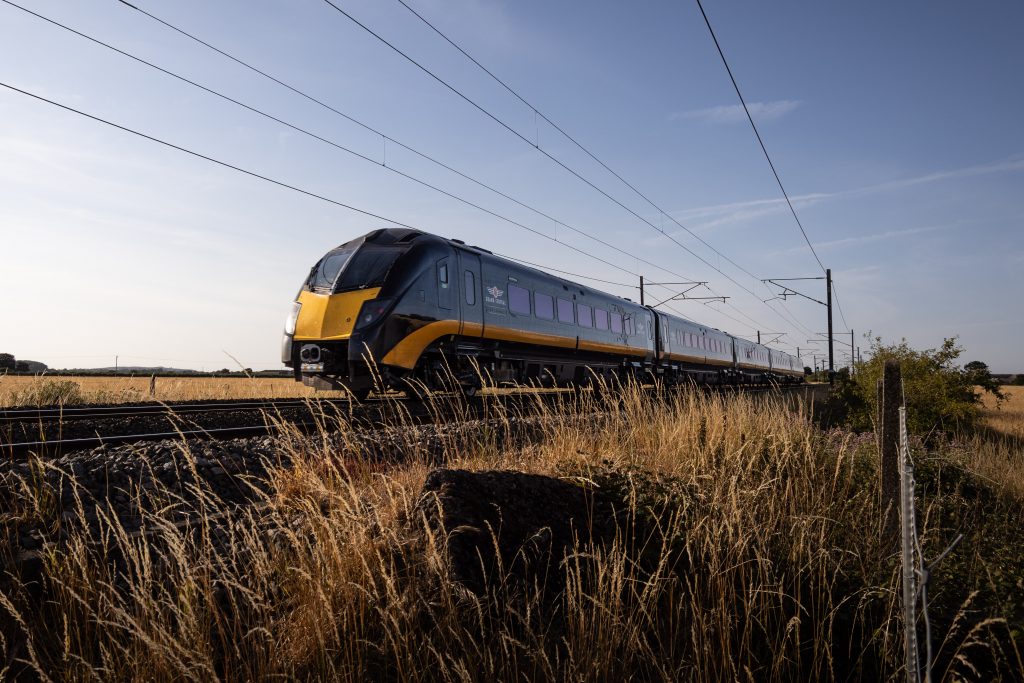
The composition is fixed; the first photograph was taken in bright sunshine, but I’m hopeful that the light will change and dusk will offer other creative opportunities for railway photography. Grand Central Class 180 speeds north.
As railway photographers, we’re always searching for the next location.
The next bridge.
The next crossing.
The next cutting.
The next dramatic viewpoint.
It’s easy to believe that creativity lies somewhere just around the corner, and that the perfect rail photograph simply requires another few miles of driving. But what if we’ve been asking the wrong question?
Instead of asking, “Where should I go next?”, perhaps we should ask:
How many different railway photographs are hidden within the composition already in front of me?”
That simple question became the inspiration for one of my favourite creative railway photography challenges.
A Creative Railway Photography Challenge
For one summer evening, I positioned myself beside the East Coast Main Line between Doncaster and York with a simple set of rules.
One camera.
One tripod.
One Lens set to 24mm.
One fixed composition.
No moving the camera.
The challenge wasn’t to chase trains or discover new viewpoints. Instead, I wanted to see how many completely different railway photographs I could create from exactly the same composition.
The only things I allowed to change were my creative decisions.
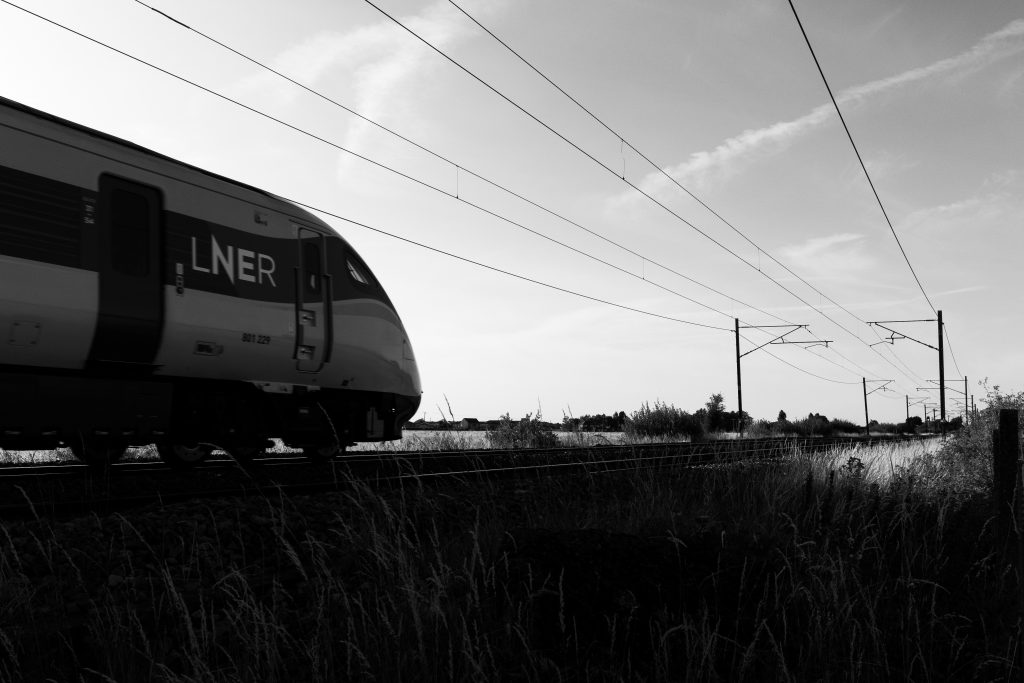
The sun is still high in the sky and moving into the camera’s field of view; a silhouette is one way to mask the sun, working effectively in mono.
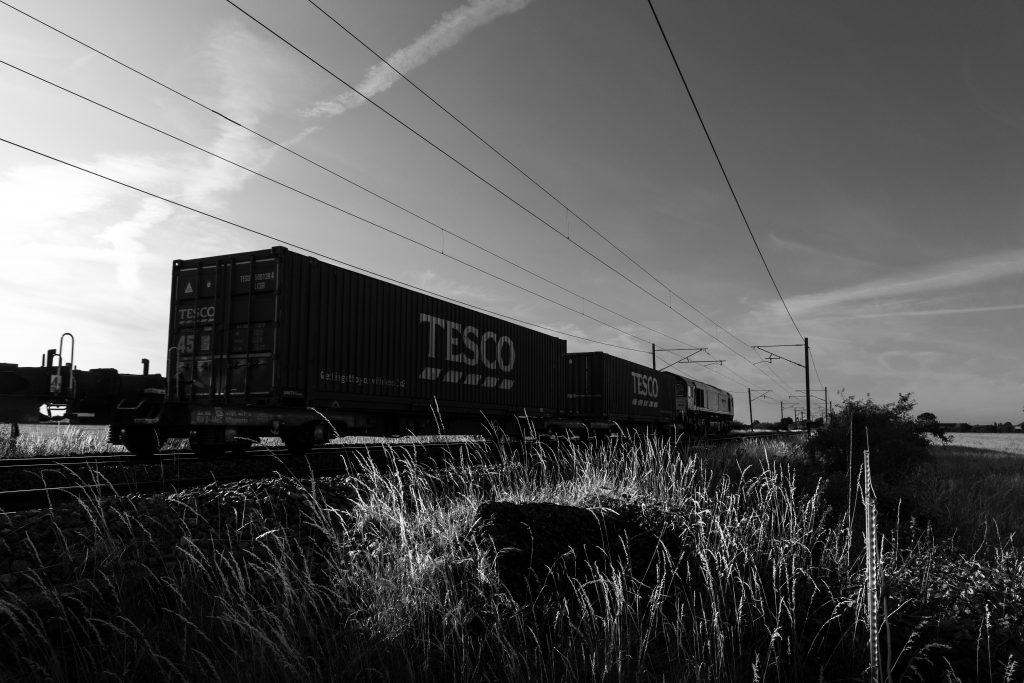
A lucky break: the wagons passing not only masked the sun, but the gap between the wagons allowed the sun to flood over the foreground grasses, again very suited to mono.
The Composition Never Changed
Throughout the evening, trains came and went, but the composition remained exactly the same.
As the sun moved across the sky, I experimented with different approaches to creative railway photography.
A straightforward front three-quarter photograph in bright sunshine became a dramatic silhouette as the light swung round. Slower shutter speeds introduced motion blur, transforming passing trains into expressions of speed rather than detail. Long exposures captured not just the train itself, but the passage of time, while selective focus shifted attention away from the train and onto the foreground grasses illuminated by the evening sun.
Later, monochrome interpretations stripped away colour and emphasised shape, contrast and texture. As darkness fell, night photography opened up another entirely different interpretation of the same scene.
Every train presented exactly the same composition. Every photograph became a different creative decision.
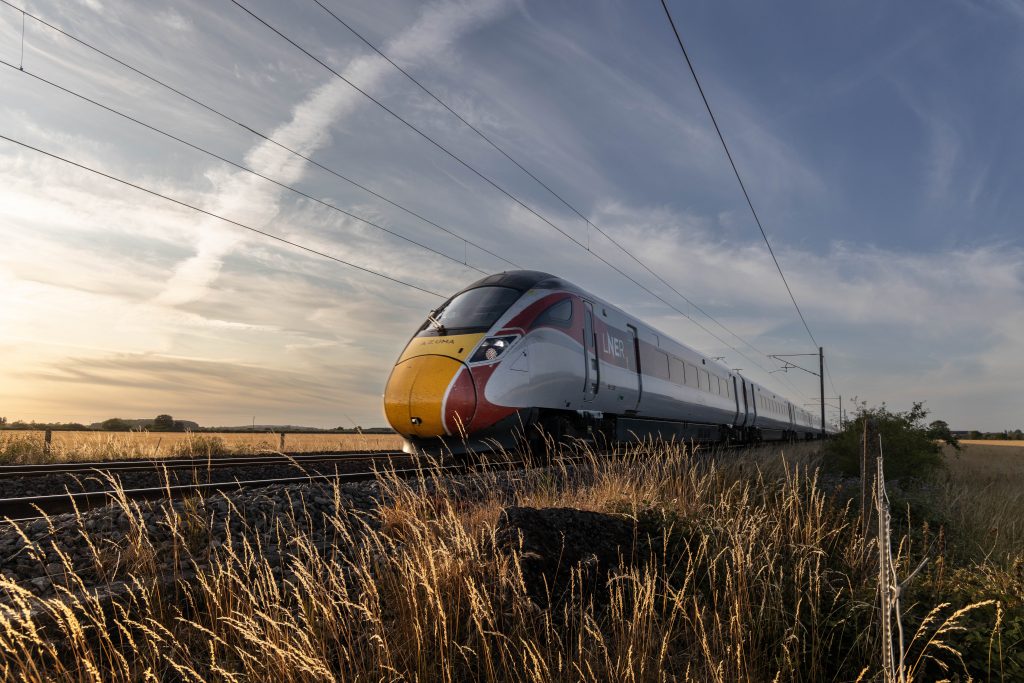
The light starts to get interesting; the sky and golden foreground grasses make the scene.
Let the Light Dictate the Photograph
One of the biggest lessons from the evening was how quickly our instinct is to move on.
Normally, I would have packed the camera away once the light became difficult or moved to another location. Instead, I stayed exactly where I was and allowed the changing light to dictate the photography.
Golden hour became sunset.
Sunset became blue hour.
Blue hour became darkness.
With every passing minute, the same scene revealed new creative possibilities.
It reminded me that railway photography isn’t always about finding a better location. Often, it’s about waiting long enough for the location you’ve already chosen to become extraordinary.
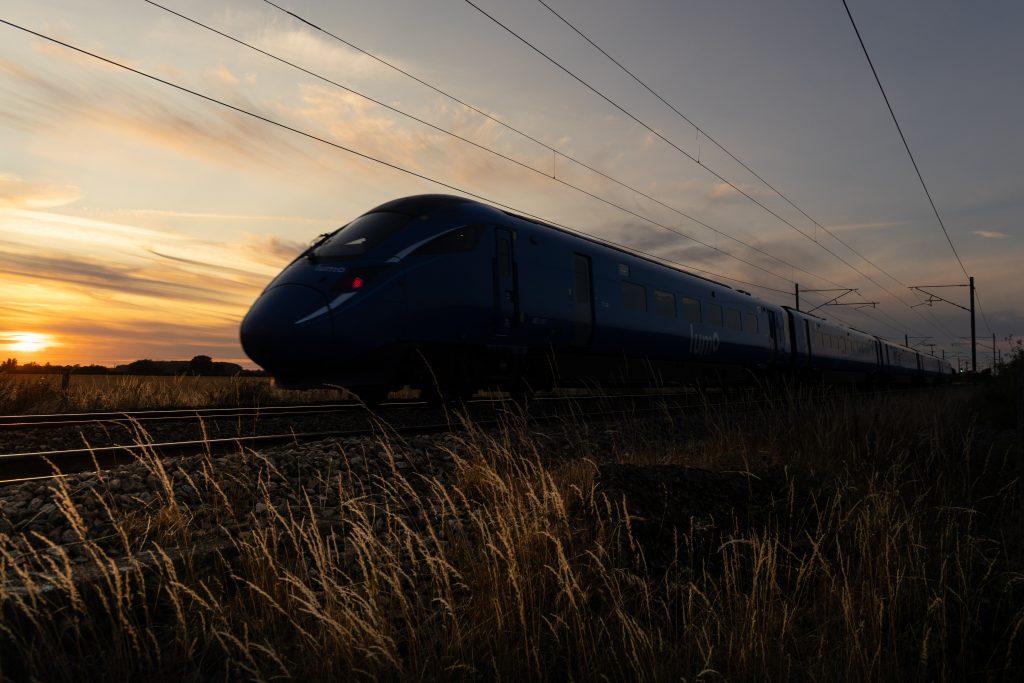
Now we’re talking, my kind of light for an almost silhouette of a speeding Lumo train.
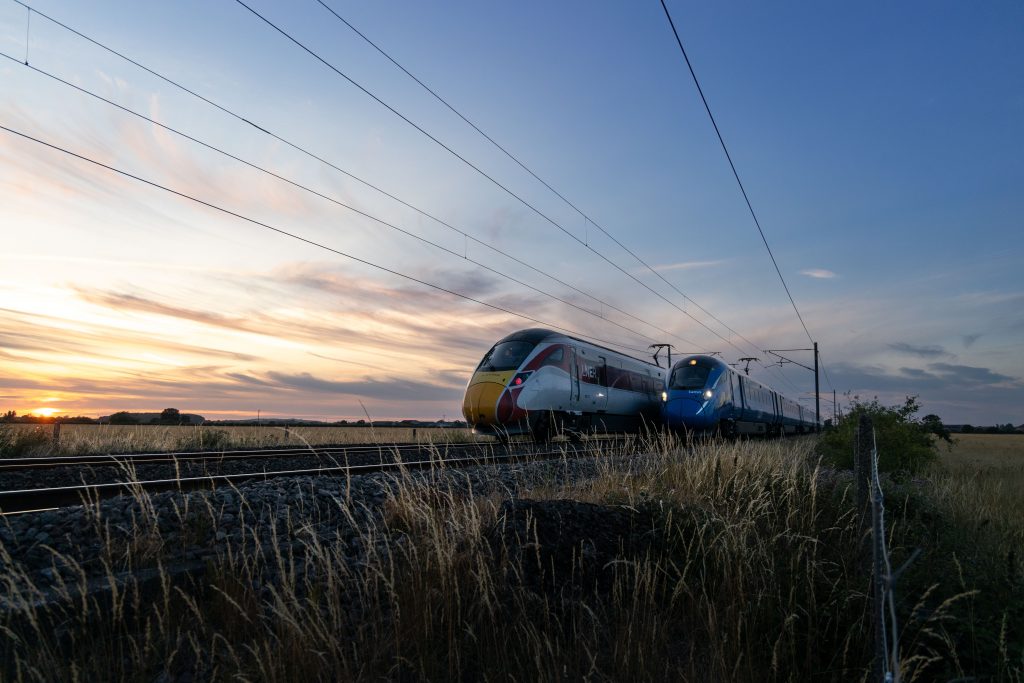
A lucky crossing, Hitachi sisters pass with a closing speed of 250mph, LNER and Lumo on the East Coast Main Line.
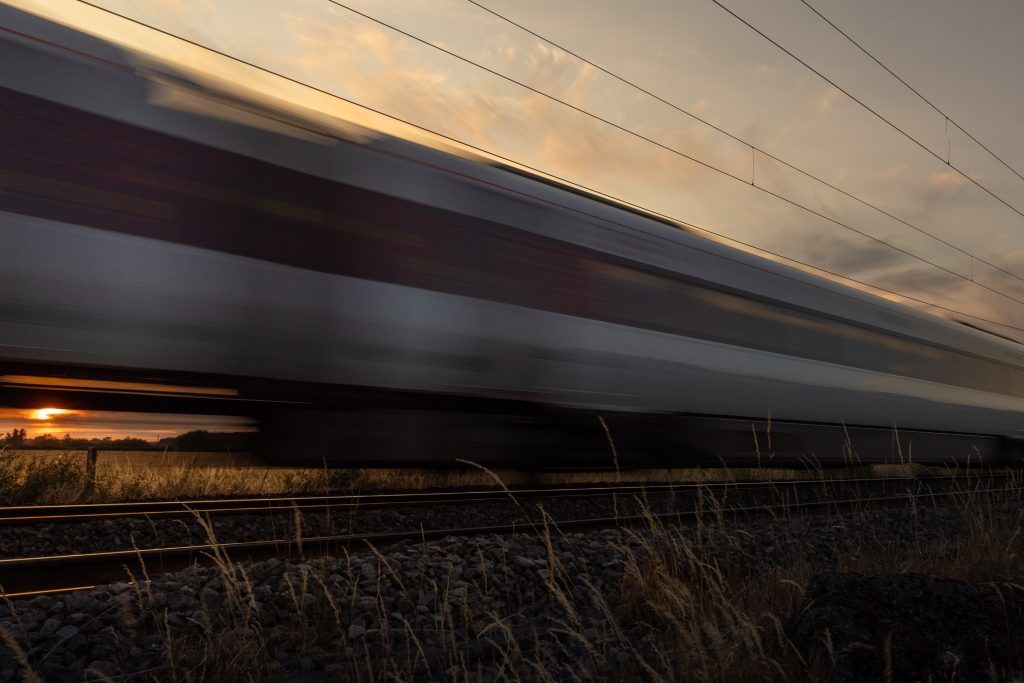
Let creativity flow, a speeding Azuma, the setting sun catches the underside of the coach, the shutter speed slowed to 1/30th Second.
Seeing Opportunity in the Ordinary
One unexpected moment came as I watched the overhead line equipment silhouetted against the evening sky.
Most railway photographers view overhead wires as something to avoid.
I began to see them differently.
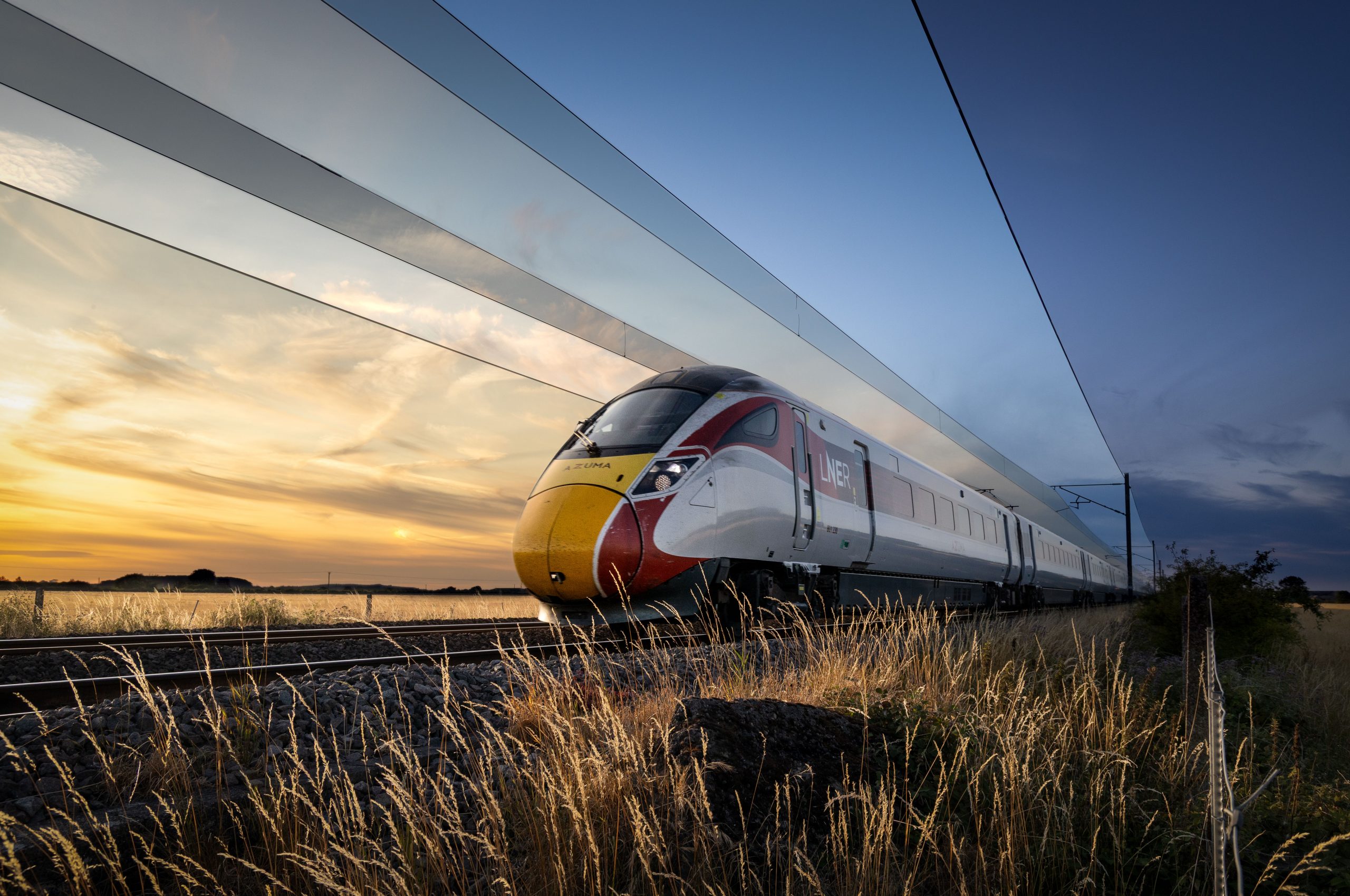
As the sky darkened, I captured multiple exposures at regular intervals and later used Photoshop to blend the changing colours between each span of wire. The overhead wires became natural dividers, allowing me to compress an entire evening into a single image.
It became a record of time itself.
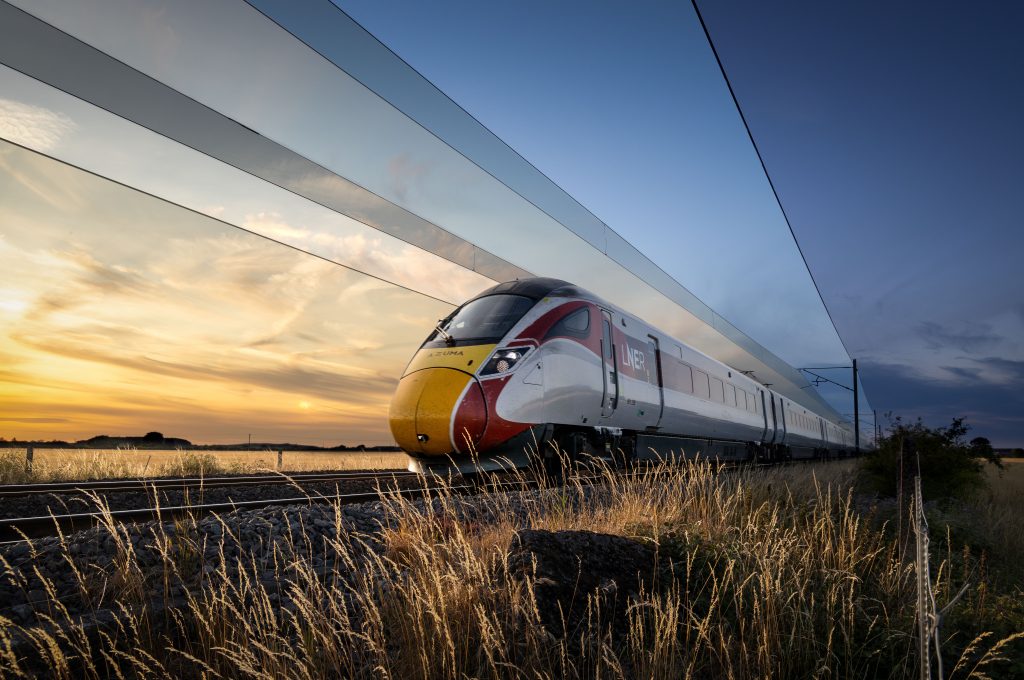
I’m really pleased with the result of this composite sky and Azuma train image; it has echoes of an LNER Poster from the 1930’s
Creative Railway Photography Is About Decisions
This challenge reinforced something I’ve been thinking about for a long time.
Creative railway photography isn’t simply about unusual locations or expensive equipment.
It’s about making conscious creative decisions.
Do you freeze motion, or embrace it?
Do you expose for the train, or the sky?
Do you use colour, or remove it altogether?
Do you photograph a train, or the atmosphere surrounding it?
The camera, lens and location may remain unchanged, but every decision changes the story your photograph tells.
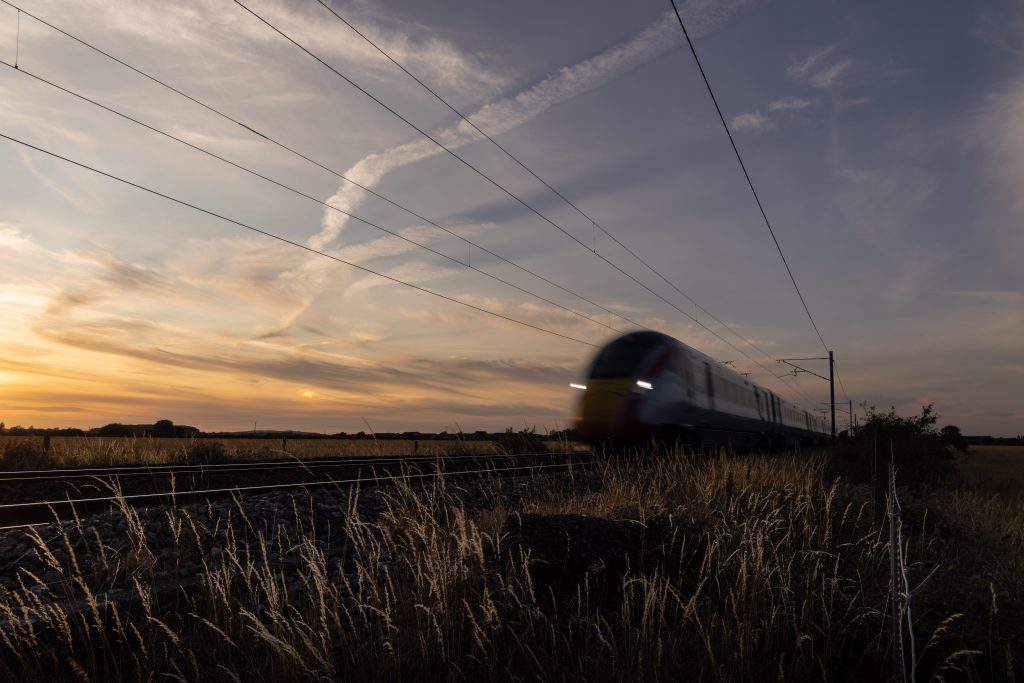
1/50th Second motion blur
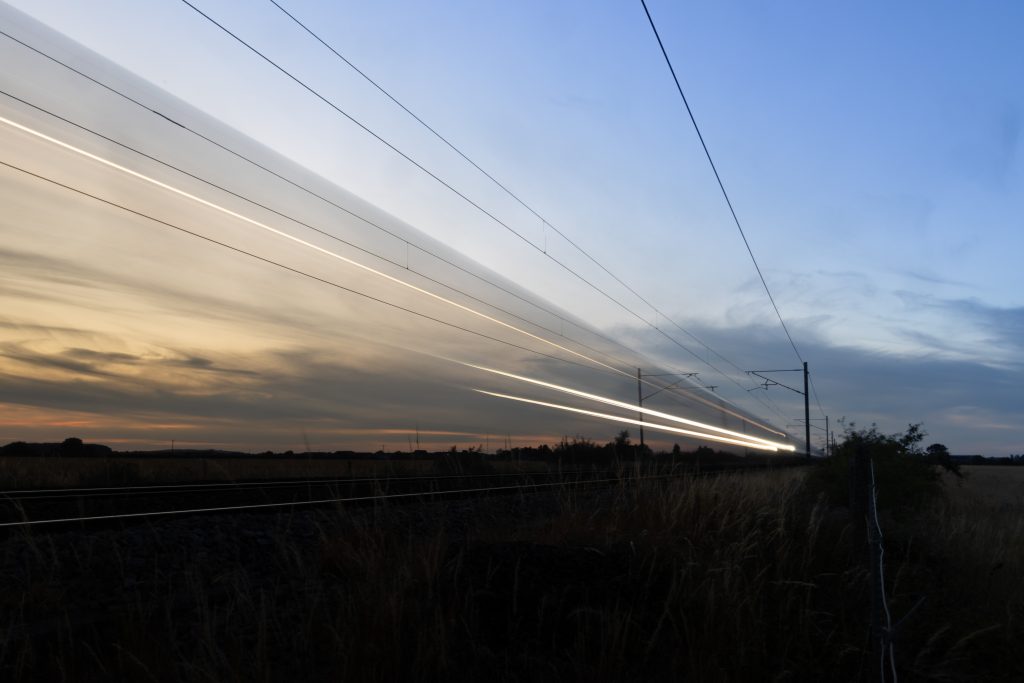
3.2 seconds Motion Blur, just a little too much light, not the effect I wanted. I would have liked the train to be more visible in the image.
Slow Down and Look Again
Perhaps the greatest lesson from this challenge had nothing to do with camera settings or Photoshop.
It was about patience.
We spend so much time chasing the next train that we often overlook the possibilities already in front of us.
Sometimes the most creative railway photography comes not from travelling further, but from staying longer.
The camera never moved.
The composition never changed.
The railway hardly changed.
The light did all the work.
So next time you’re out photographing the railway, resist the temptation to move on after the first train. Stay for another hour. Watch the light change. Experiment with different techniques. Challenge yourself to see the same scene in a completely different way.
You may discover that creativity wasn’t waiting at the next location after all.
It was waiting patiently in the one you had already chosen.
There came a point when I realised I would normally have packed up and gone home. The best light had passed, the timetable was thinning out and the obvious photographs had been taken. But that was precisely the moment the challenge became interesting.”
The overhead wires had always been something to work around. That evening, they became part of the composition.
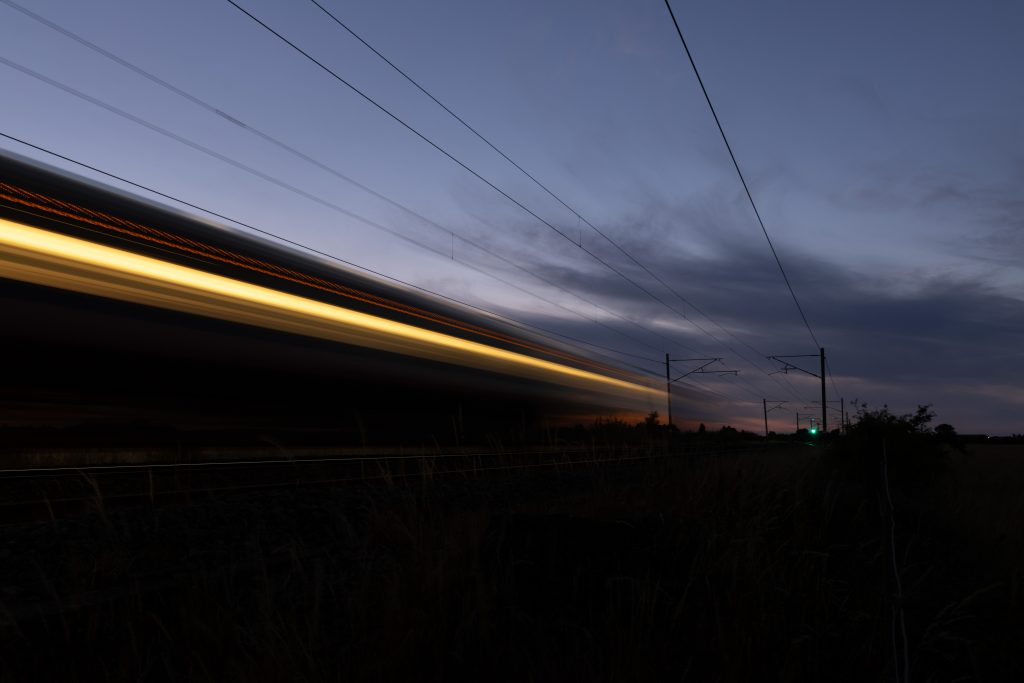
East Coast Speeds to the north, a long exposure of 1 second
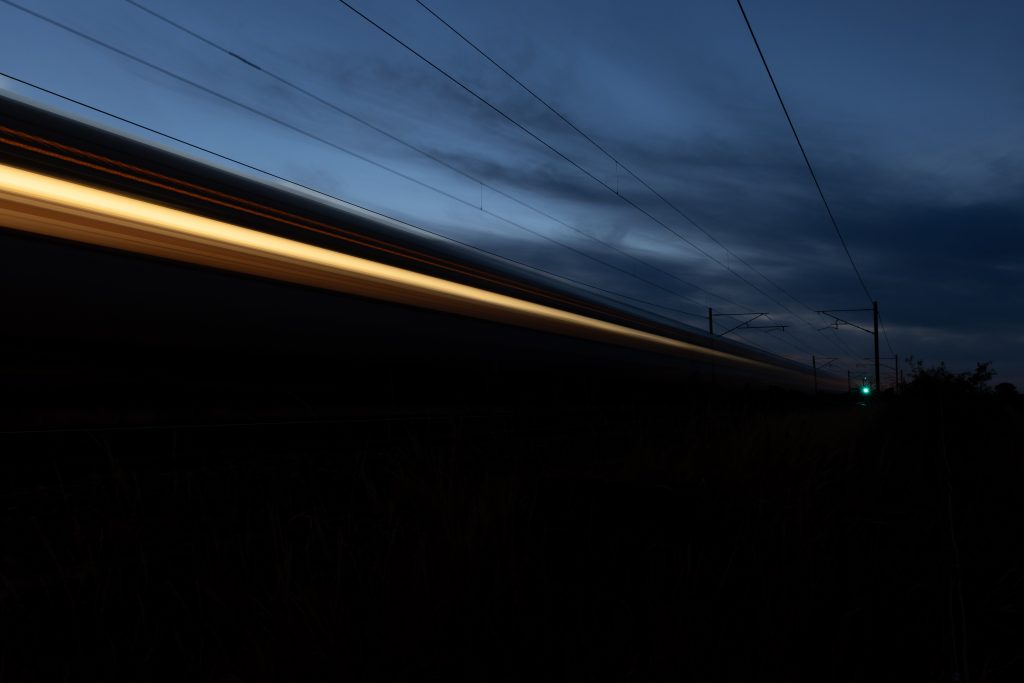
A 3.2 second exposure in almost pitch darkness, just the faint light in the northern sky; I’m pleased the green signal is visible, telling the story of all clear and speed north.
How many photographs are hidden in your favourite location?
The next time you’re out with your camera, try this challenge yourself. Fix your composition, resist the temptation to move, and let the changing light shape your photography. You might discover that creativity isn’t about finding another location; it’s about seeing new possibilities in the one you’ve already chosen.
Watch the full video below and join me for an evening of creative railway photography on the East Coast Main Line.